Original title:The gut–brain axis underlying hepatic encephalopathy in liver cirrhosis
Journal:Nature Medicine
Impact factor:58.70
In this study, a germ-free cirrhotic mouse model was repeatedly used to validate the pathogenic role of Ruminococcus gnavus and the neurotoxicity of its metabolite phenylethylamine (PEA). (Conducted by Gnotobio Biotechnology)
Research results presentation:
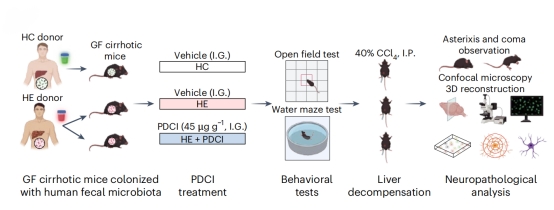
Fecal microbiota transplantation (FMT) from HE patients into germ-free cirrhotic mice provided by Gnotobio Biotechnology successfully replicated HE-like neurological symptoms, including memory impairment, symmetric tremors, cortical neuron loss, and so on.
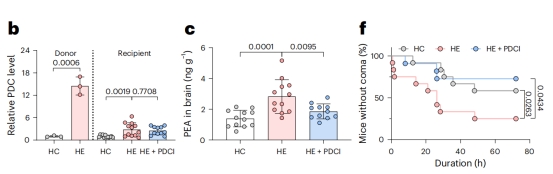
Mono-colonization of R. gnavus into Gnotobio Biotechnology's germ-free mice (including both normal and cirrhotic models) revealed that cerebral PEA accumulation, behavioral abnormalities, and neuropathological changes only occurred in the cirrhotic background, with no such phenomena observed in normal mice.
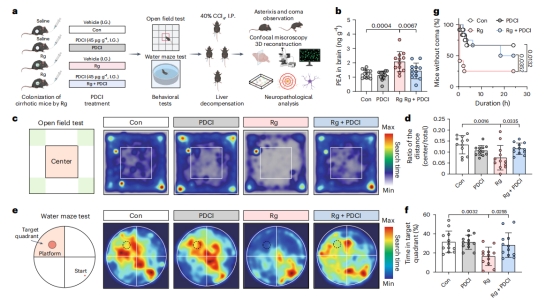
These experiments confirmed that impaired liver function (reduced MAO-B activity) is a key condition for the R. gnavus-PEA axis to contribute to HE. Interventions targeting PDC (phenylalanine decarboxylase) or PEA (e.g., PDC inhibition or PEA-neutralizing antibodies) significantly reversed neurological symptoms in these germ-free cirrhotic mouse models, further validating the causal relationship.