Original title:Lactobacillus acidophilus potentiates oncolytic virotherapy through modulating gut microbiota homeostasis in hepatocellular carcinoma
Journal:Nature Communications
Impact factor:15.7
In this study, antibiotic-treated (ABX) pseudo-germ-free mice were used for key causal validation experiments, particularly to demonstrate that the presence of gut microbiota limits oncolytic virus efficacy, as well as the protective effect of L. acidophilus supplementation. (Conducted by Gnotobio Biotechnology)
Research results presentation:
The H22 oncolytic virus therapy experiment was conducted in both germ-free (ABX-induced) C57BL/6J mice and conventional SPF mice. VSVΔ51 exhibited significantly higher antitumor efficacy in ABX-treated mice, including stronger tumor growth inhibition and prolonged survival, confirming that the presence of the gut microbiota is an important factor limiting oncolytic virus (OV) efficacy. The study further simulated OV-induced dysbiosis following VSVΔ51 infection in ABX-treated mice (through subsequent colonization or comparative analysis) and investigated whether L. acidophilus supplementation could restore gut microbiota homeostasis and enhance OV sensitivity by improving intestinal barrier function, reducing inflammation, and enhancing tumor killing activity.
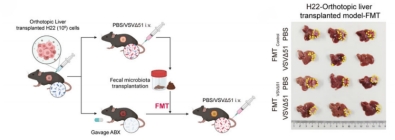
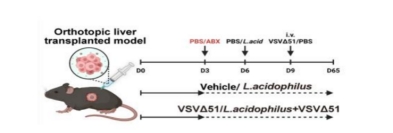
This experiment represents the key link in the mechanistic causal chain: the germ-free (GF) model excludes interference from other microorganisms, specifically demonstrating that VSVΔ51-mediated disruption of L. acidophilus colonization is the critical factor limiting therapeutic efficacy, and that supplementation with this bacterium can synergistically enhance oncolytic efficacy.