Original title:Gut microbe alleviates stress-related cancer metastasis by oleic acid degradation
Journal:GUT
Impact factor:25.8
In this study, germ-free mice were used for key causal validation experiments, particularly to demonstrate the pro-metastatic effects of stress-induced microbiota changes (especially the reduction of B. animalis) and OA accumulation. (Conducted by Gnotobio Biotechnology)
Research results presentation:
After constructing a germ-free mouse model of colorectal cancer (CRC) metastasis and subjecting it to chronic stress treatment, the results showed that the promotion of cancer metastasis by chronic stress required the involvement of the microbiota. Fecal microbiota transplantation (FMT) reconstitution experiments confirmed this conclusion.
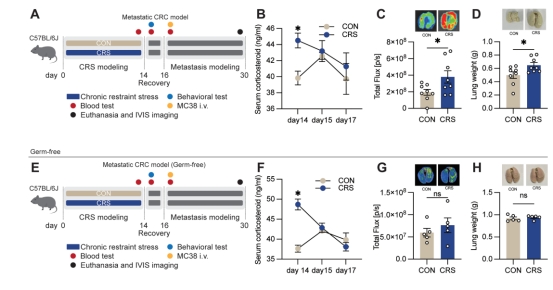
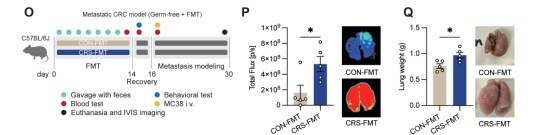
Meanwhile, using lipidomics approaches, it was found that under chronic stress conditions, B. animalis was suppressed, while the level of the intestinal fatty acid OA was significantly increased.
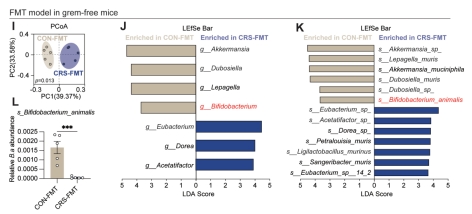
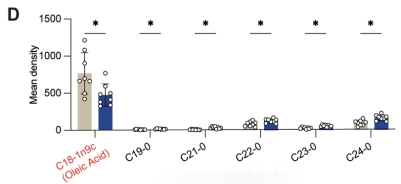
Through mono-colonization with B. animalis or fecal microbiota transplantation (FMT), we compared whether supplementation with B. animalis in a germ-free background could reduce OA levels and reverse the metastatic phenotype, whereas no such protective effect was observed in the control group.
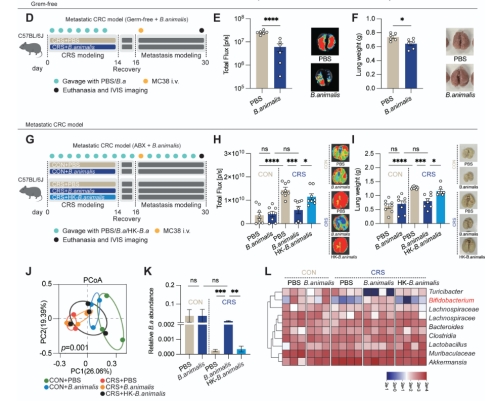
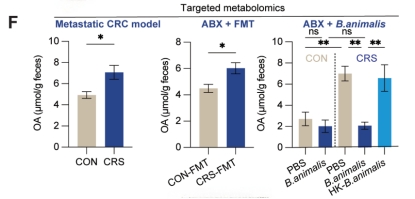
These experiments represent key steps in the mechanistic causal chain, demonstrating the specific role of the B. animalis-OA axis in stress-associated metastasis, as well as the molecular pathway by which stress hormones (corticosteroids) inhibit B. animalis through interfering with intestinal epithelial guanine metabolism.